
Learn how coordinated gutter profiles, flashing, and roof edge protection work together to eliminate leak points and reduce service callbacks in Spring, TX.
Summary:
Traditional sectional gutters create multiple opportunities for water intrusion. Every joint where sections connect becomes a potential failure point, especially during Spring’s intense rainfall periods.
Seamless gutters change this equation entirely. By forming continuous runs without joints along straight sections, they eliminate the most common source of gutter leaks. The only seams exist at corners and downspout connections—the absolute minimum needed for a functional system.
This reduction in seam points directly translates to fewer callback visits. When contractors don’t have to return to seal failing joints or replace separated sections, both homeowner and contractor benefit from the reliability of a properly coordinated system.
The real advantage of seamless gutters becomes clear when you understand how they’re made. Rather than trying to fit pre-cut sections to your roofline, we bring specialized equipment that forms gutters to your exact measurements right at your property.
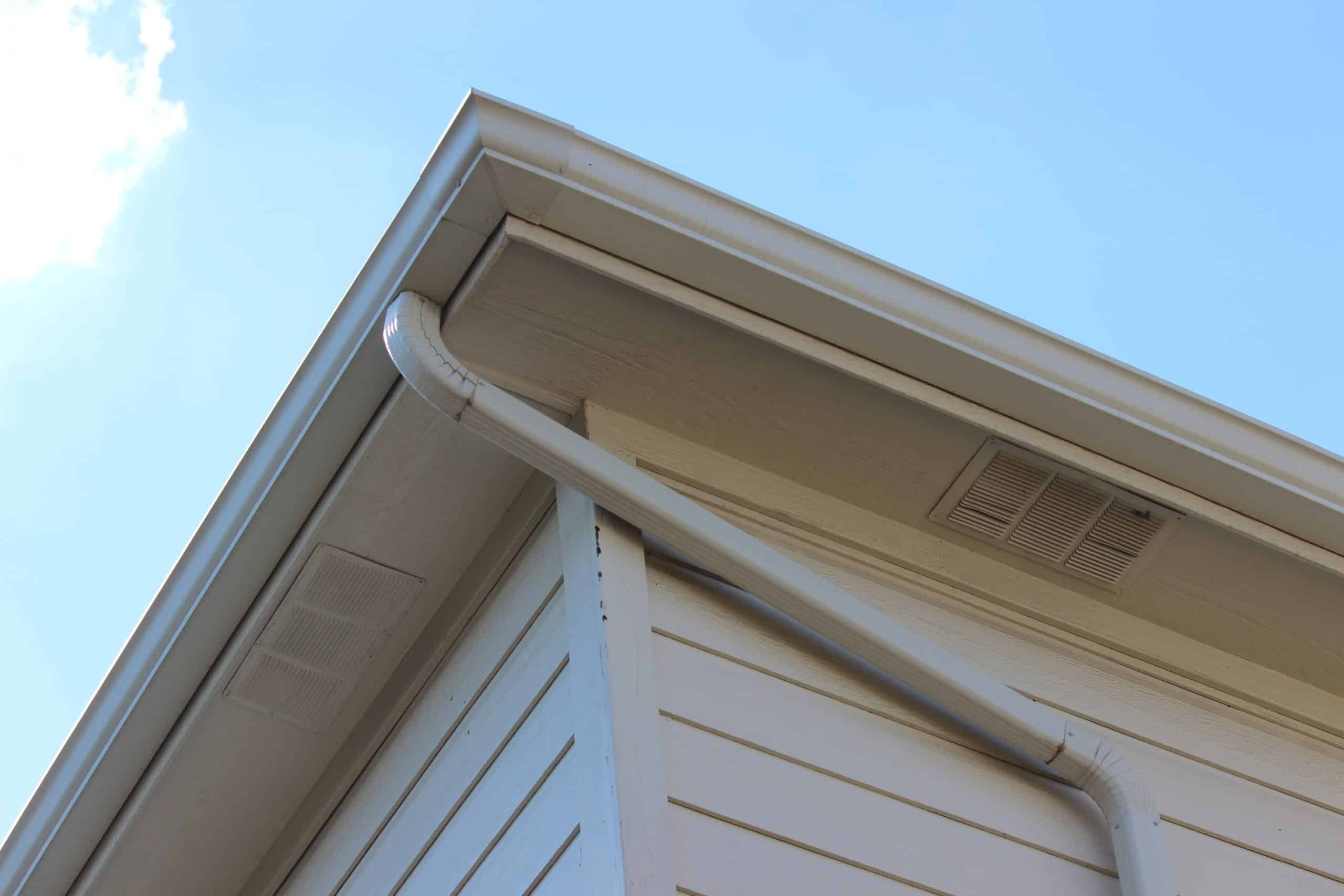
This custom approach allows for precise coordination with your roof edge details. We can account for fascia board variations, roof slope irregularities, and architectural features that would create problems with sectional systems. When gutters fit exactly as intended, water flows where it should instead of finding unexpected paths behind your drainage system.
The on-site fabrication process also means we can make real-time adjustments as we work. If we discover an issue with roof edge preparation or flashing details, we can modify the gutter profile accordingly. This flexibility prevents the compromises that often lead to callback situations.
Spring’s weather patterns make this precision especially valuable. When storms bring heavy rainfall and strong winds, properly fitted gutters handle the volume and pressure without allowing water to escape at connection points. The custom fit ensures your system performs as designed, even under challenging conditions.
Not all gutter profiles work equally well with different roof edge configurations. The relationship between your gutter style and roof edge details affects how effectively water transfers from roof to drainage system.
K-style gutters offer excellent capacity and work well with most residential roof edges, but they require proper coordination with drip edge flashing to prevent water from running behind the system. Half-round gutters provide a more traditional appearance and can be easier to coordinate with certain roof edge profiles, though they may have lower capacity for Spring’s intense rainfall events.
The key lies in selecting a profile that complements your specific roof edge configuration rather than fighting against it. When gutters and roof edges work together, water flows smoothly from shingles into the gutter channel without creating turbulence or splash-back that can cause problems.
We evaluate factors like roof slope, shingle type, and existing flashing conditions when recommending a gutter profile. This assessment ensures the chosen system integrates properly with your roof edge details rather than creating potential conflict points.
Material selection also plays a role in coordination effectiveness. Aluminum gutters can be formed to precise profiles that match roof edge requirements, while maintaining the strength needed for reliable long-term performance. The ability to customize both size and shape during fabrication allows for optimal coordination with your specific roof edge conditions.
Want live answers?
Connect with a Arm Strong Gutters & Sheet Metal expert for fast, friendly support.
Flashing serves as the bridge between your roof system and gutter installation . Without proper flashing coordination, even the best seamless gutters can’t prevent water intrusion issues.
The most critical flashing component for gutter coordination is the drip edge, which directs water from the roof surface into the gutter channel. When this flashing is properly integrated with gutter installation, it creates a continuous water management system that eliminates gaps where leaks typically develop.
Proper sequencing matters tremendously. Flashing must be installed before gutters, allowing the gutter system to coordinate with the established water flow path rather than trying to retrofit around existing gutters.
Where roofs meet walls, step flashing creates a critical transition that must coordinate properly with gutter systems. This coordination becomes especially important at roof-wall intersections where gutters terminate against vertical surfaces.
Step flashing works by creating overlapping layers that direct water down and away from the wall intersection. Each piece overlaps the one below it, creating a continuous path for water to follow. When gutters coordinate properly with this flashing system, they capture the water at the bottom of the step flashing sequence and direct it away from the structure.
Kickout flashing plays an equally critical role at the end of roof-wall intersections. This specialized flashing component diverts water away from the wall and into the gutter system. Without proper kickout flashing, water can run down the wall surface instead of entering the gutter, leading to siding damage and potential structural issues.
The coordination between these flashing components and gutter installation requires careful attention to detail. Gutters must be positioned to capture water from kickout flashing while maintaining proper slope for drainage. The connection points need to be sealed properly to prevent water from bypassing the intended flow path.
Spring’s weather patterns make this coordination especially critical. During intense rainfall events, improperly coordinated flashing and gutters can allow significant water volumes to escape the intended drainage path. This can lead to rapid development of water damage issues that require immediate attention.
Advanced roof edge protection involves continuous underlayment systems that extend from the roof surface through the gutter area and down the fascia board. This creates what professionals call a “waterproof superhighway” that provides backup protection if primary systems experience issues.
The integration of continuous underlayment with gutter systems requires careful coordination during installation. The underlayment must be positioned to direct any water that bypasses primary barriers into the gutter system rather than allowing it to accumulate behind gutters or against fascia boards.
This approach provides multiple layers of protection that work together rather than as independent systems. If wind-driven rain bypasses the primary roof covering, the underlayment directs it toward gutters. If gutters experience temporary overflow during extreme weather events, the underlayment prevents water from penetrating into structural components.
The coordination also accounts for thermal movement in both roofing and gutter systems. Metal roofs and gutters expand and contract with temperature changes, and the underlayment system must accommodate this movement without creating gaps or stress points that could lead to failures.
For Spring homeowners, this integrated approach provides confidence during severe weather events. When multiple protection layers work together in a coordinated system, temporary overload conditions don’t immediately translate to water damage issues. The system has built-in redundancy that maintains protection even when individual components are stressed beyond normal operating conditions.
The difference between a gutter installation and a coordinated water management system lies in how well the components work together. When seamless gutters, proper flashing, and roof edge protection function as an integrated system, you eliminate the common failure points that lead to callbacks and water damage.
This coordinated approach makes particular sense in Spring, TX, where weather patterns demand reliable performance from drainage systems. Rather than treating gutters as an isolated component, successful installations consider the entire water management system from roof surface to final drainage.
For homeowners ready to invest in proper coordination, we bring the expertise needed to create these integrated systems. Our understanding of how gutter profiles, flashing details, and roof edge protection work together ensures you get a system designed for long-term reliability rather than quick fixes.
Article details:
Share:
Continue learning: