
Discover which gutter type - seamless or sectional - offers the best protection for Harris County's heavy rainfall and foundation challenges.

Summary:
Seamless gutters are custom-cut on-site to run the full length of your home, with join points only at corners. They’re manufactured right at your property by running a sheet of metal through a gutter-forming machine, creating a continuous gutter that’s then securely mounted to your home.
This isn’t just about convenience. In Harris County, where we have extensive knowledge of the local climate and its effects on homes, seamless gutters provide the kind of protection your property actually needs. They’re specifically designed to handle heavy rainfall, reducing the risk of leaks and foundation issues that plague so many homes in our area.
Houston’s rainfall patterns are intense—Hurricane Harvey alone brought 79.69 inches in 2017, and our monsoon season runs from May to October. Your gutters need to handle not just regular rain, but the kind of extreme weather events that have become increasingly common.
Seamless gutters are typically stronger because they don’t have miters joining pieces together, and the more seams a gutter system has, the higher the potential for leaks. When you’re dealing with the volume of water that Harris County sees, those seams become failure points.
Seamless gutters have only two seams—at the ends where caps are attached—avoiding contact with water and debris. This dramatically reduces the risk of clogs, which is crucial when you consider how quickly our afternoon thunderstorms can dump several inches of rain in a short period.
The manufacturing process matters too. Premium materials are brought right to your house and cut on-site for a custom fit, then installed with rivets rather than screws to withstand the high winds and falling debris common in severe Texas weather.
Regular sectional gutters are expected to last 10 to 20 years with proper maintenance, while seamless gutters last 25 to 50 years depending on material choice. In Harris County’s challenging climate, this difference becomes even more pronounced.
All gutters have protective coatings, but as rainwater passes over the joints of sectional gutters, it strips away this protective material and begins deteriorating the metal. Seamless gutters are less likely to rust and decay. This is particularly important in our humid subtropical climate where average temperatures reach 95°F in August with high humidity year-round.
Aluminum seamless gutters last around 20 to 30 years, while copper gutters last 50 years or more with proper care. The seamless design reduces the potential for leaks and damage, contributing to a longer lifespan than traditional gutters. When you factor in the cost of repairs and early replacement, seamless gutters often prove more economical over time.
The aesthetic benefits matter too. Seamless gutters have baked-in colors that resist fading with vast color selection, while sectional gutters scratch, chip, and flake easily, requiring regular painting. In Harris County’s intense sun and weather, this durability difference is significant.
Want live answers?
Connect with a Arm Strong Gutters & Sheet Metal expert for fast, friendly support.
Sectional gutters consist of pre-cut pieces that must be assembled and installed manually, while seamless gutters require professional equipment to create. The major advantages of sectional gutters are that they’re DIY-friendly, cost-effective, and easy to install, making them attractive to homeowners with tight budgets.
Sectional gutters are most commonly made of vinyl or plastic materials that aren’t available as seamless gutters since they can’t be made into roll form. Each section must be mitered and sealed together, making installation much longer. For Harris County homeowners, this creates specific challenges that go beyond just installation complexity.
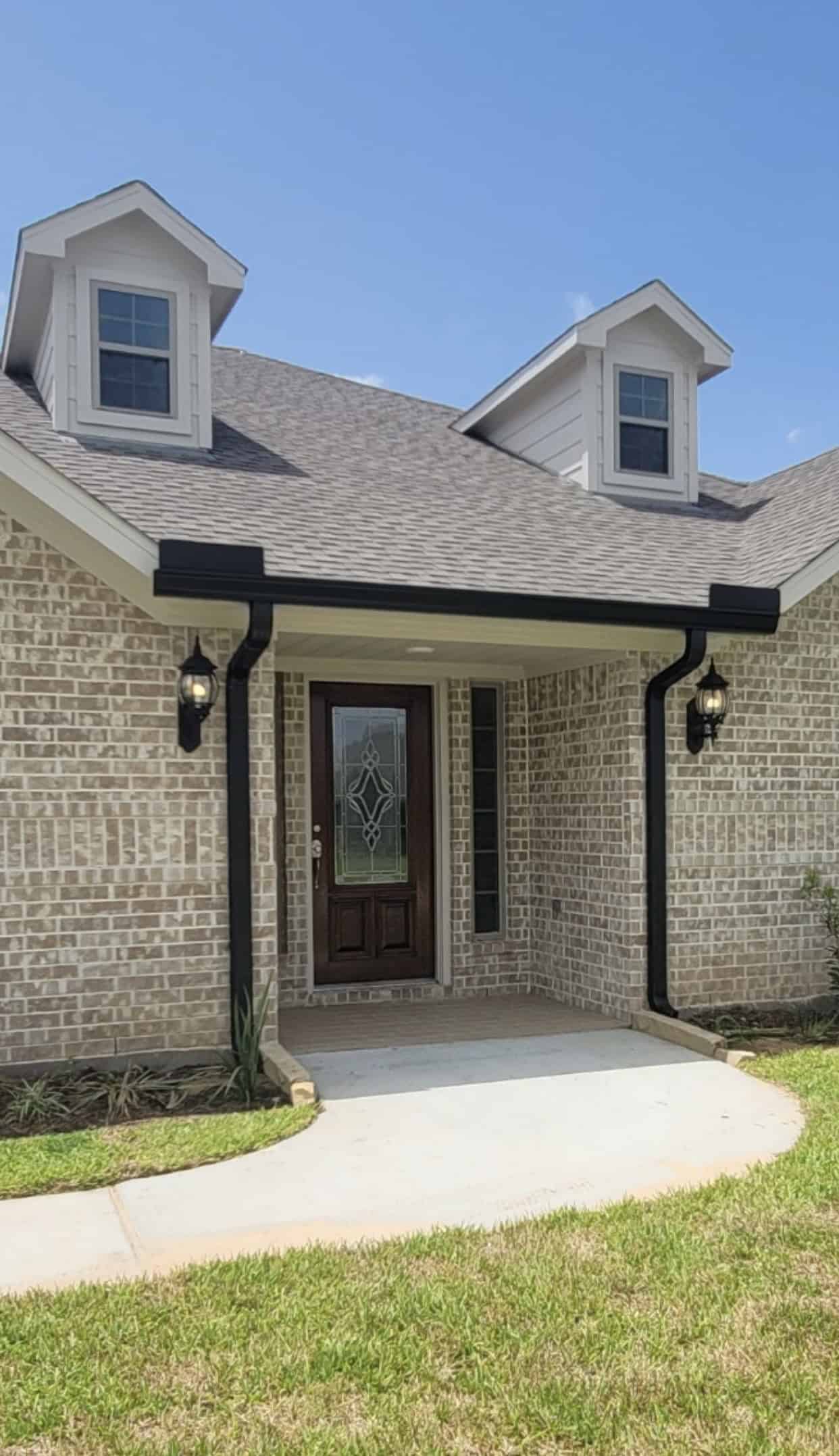
There’s been an alarming increase in major flooding events along the Gulf Coast, with results showing a statistically significant increase in extreme rainfall at the expense of lighter rainfall over time. This trend makes the weakness of sectional gutters more problematic for Harris County homes.
Debris catches and blocks water flow at the beginning and end of sections, causing water to overflow and damage exterior, ground, and foundation. Regular gutters have seams every ten to twenty feet. In our area where flooding most frequently occurs in October and November from Eastern Pacific cyclone remnants, these multiple failure points become serious risks.
As water passes over the seams where sections are nailed or screwed together, the joints wear out, pull apart, and break down. When soil absorbs rainwater, it expands, then contracts as it dries, putting tremendous stress on your foundation and causing cracks that lead to expensive repairs. Sectional gutters’ tendency to fail at joints means they’re less reliable at directing water away from your foundation during these critical soil movement cycles.
Sectional gutters are also less sturdy due to the materials used, making them more susceptible to damage. Given that Houston experiences supercell thunderstorms and tropical cyclones during hurricane season, this structural weakness becomes a significant concern.
Many homeowners assume sectional gutters are more cost-effective, but the overall cost difference is usually minimal. Sectional gutters require additional components like connectors, caulking, and fasteners, which add to total expense. Since they’re more prone to leaks and wear, they often require more frequent repairs or replacements, leading to greater long-term costs.
The cost is actually nearly identical because of all the extra pieces, caulking, and tools needed to complete a sectional gutter install . Because sectional gutters may be less sturdy and are often DIY installations, they’re not likely to last as long as seamless installations, meaning more costs in the future.
For Harris County homeowners, this cost consideration becomes more complex when you factor in our weather patterns. In Houston’s erratic climate with heavy rain, high winds, and humidity, proper gutters are essential to avoid water-related damage and guard your investment. The frequent repairs and earlier replacement needs of sectional gutters can quickly offset any initial savings.
One disadvantage of seamless gutters is that repairs can be more challenging since they’re made as one continuous piece, and damage to a section may require replacing the entire gutter length. However, seamless gutters are particularly useful in regions with heavy rainfall where leaky gutters can lead to water damage and costly repairs, making them less prone to rust and corrosion as a longer-lasting option.
Foundation problems affect 90% of homes with rainwater damage due to non-functioning gutters, making this one of the primary issues for Houston area homes. When you’re protecting your most valuable asset in an area that receives 1507mm (nearly 60 inches) of precipitation annually, the choice becomes clear.
Seamless gutters have fewer issues including fewer leaks and clogs, giving homeowners more peace of mind compared to sectional gutters. For Harris County’s unique challenges—from intense rainfall to clay soil conditions—seamless gutters provide the reliable, long-term protection your home needs.
If you’re ready to protect your Harris County home with a gutter system designed for our climate, Arm Strong Gutters & Sheet Metal brings the expertise and quality materials your property deserves. We understand what works in Harris County, and we’re here to help you make the investment that protects your home for decades to come.
Article details:
Share:
Continue learning: